AC Repair
Warm air from your vents is a fault, not a mood. Here is what to check and do.
Your system broke and you have never dealt with this. Start here. Learn what is happening, what it may cost, and how to reach a local provider.
No obligation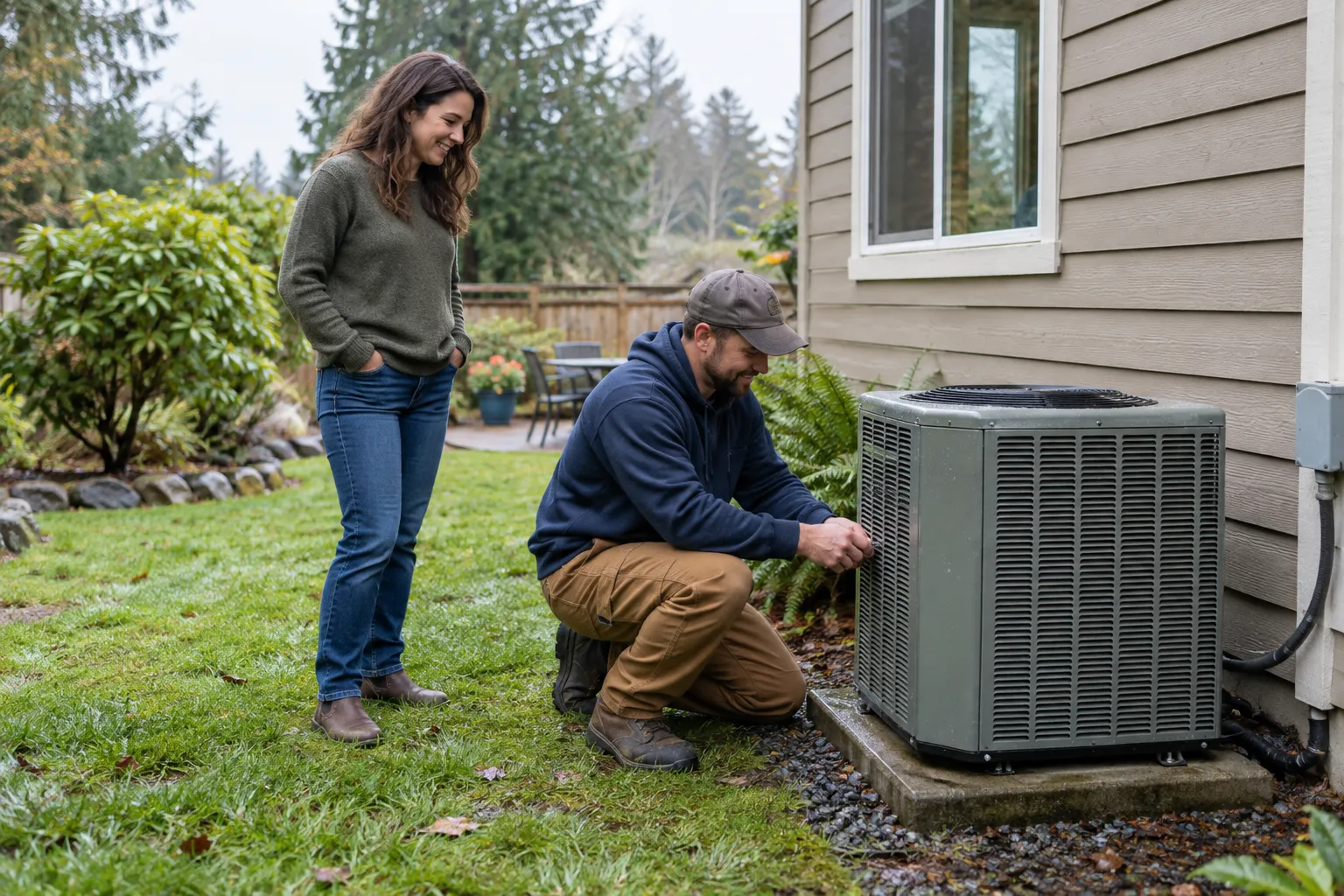
Tell us what you see, hear or smell, and when it started. Short notes work fine.
Send the request form. A local provider in our network gets back to you.
Read the written quote. Ask what failed and what the work includes.
Say yes only when you are comfortable. The provider schedules and does the work.
Tell us what your system is doing. Send a request and a local provider in our network can reach out to talk about next steps.
No obligationThree kinds of help are on offer. Pick the one that matches your problem.
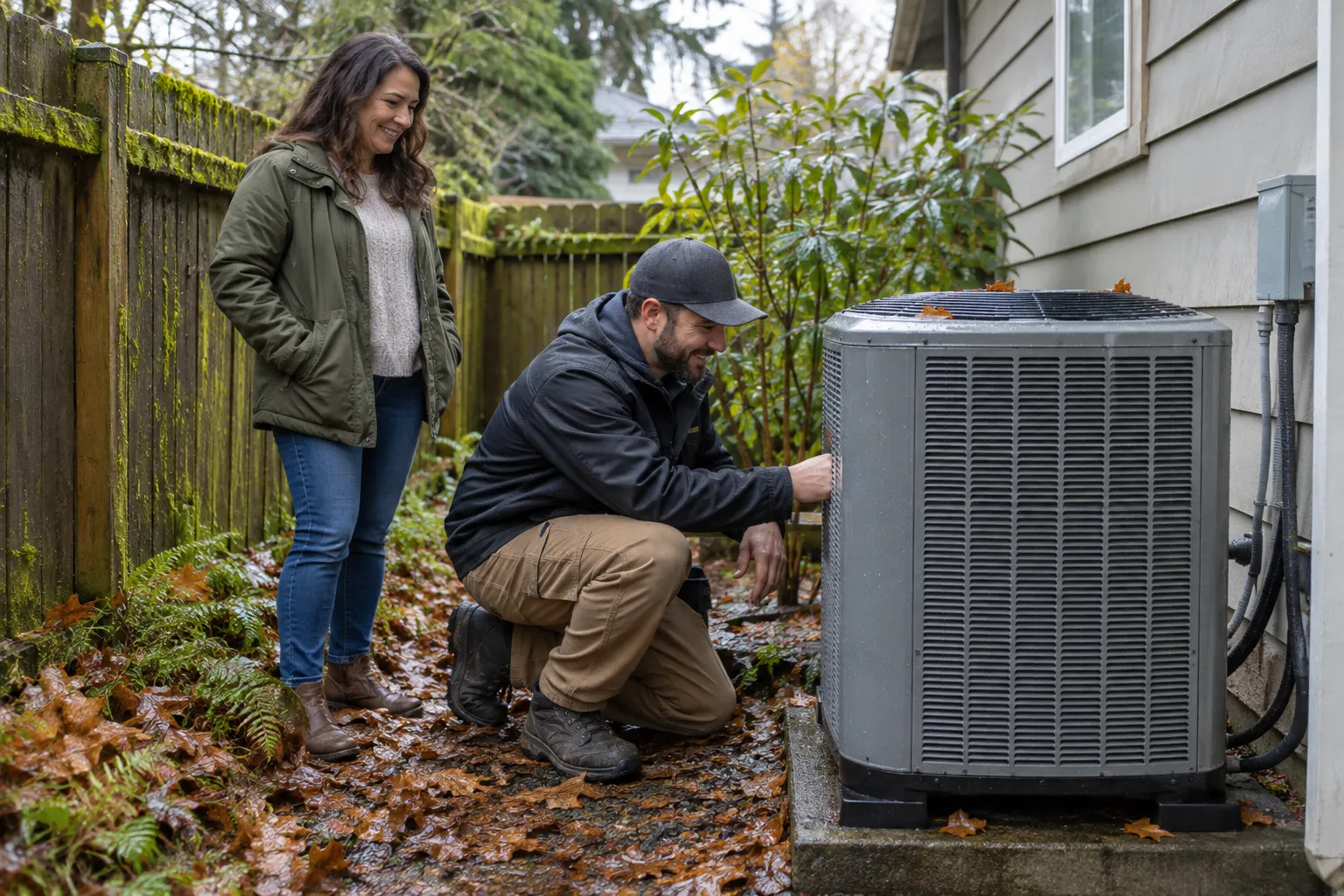
AC Repair. The air is warm, the unit is loud, or it will not start. This is the most common call. Many people search for emergency AC repair when the house gets stuffy, and providers in our network can talk about timing.
Furnace Repair. The house is cold, the burner clicks, or you smell something odd. Treat a gas smell as a safety issue. Leave the house and contact your gas utility first.
AC Installation and Replacement. Your system is old, worn out, or too costly to keep fixing. Some homeowners also search for furnace replacement near me when repair bills stack up.
Not sure which one fits? Send a request and describe the symptoms. A provider can help you sort it out.
Warm air from your vents is a fault, not a mood. Here is what to check and do.
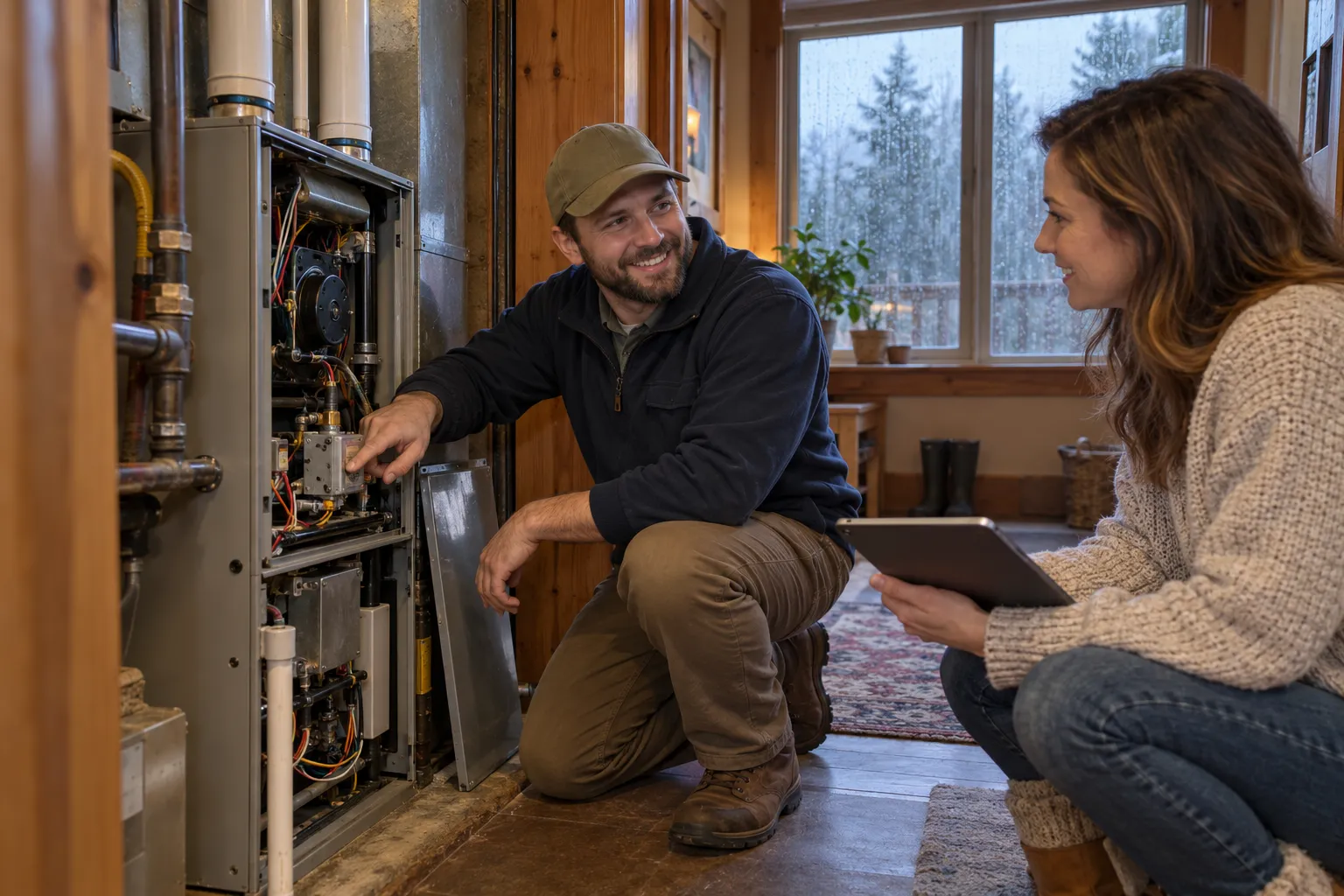
Furnace trouble gets worse fast in a cold, wet season, so the smart first move is an estimate request.
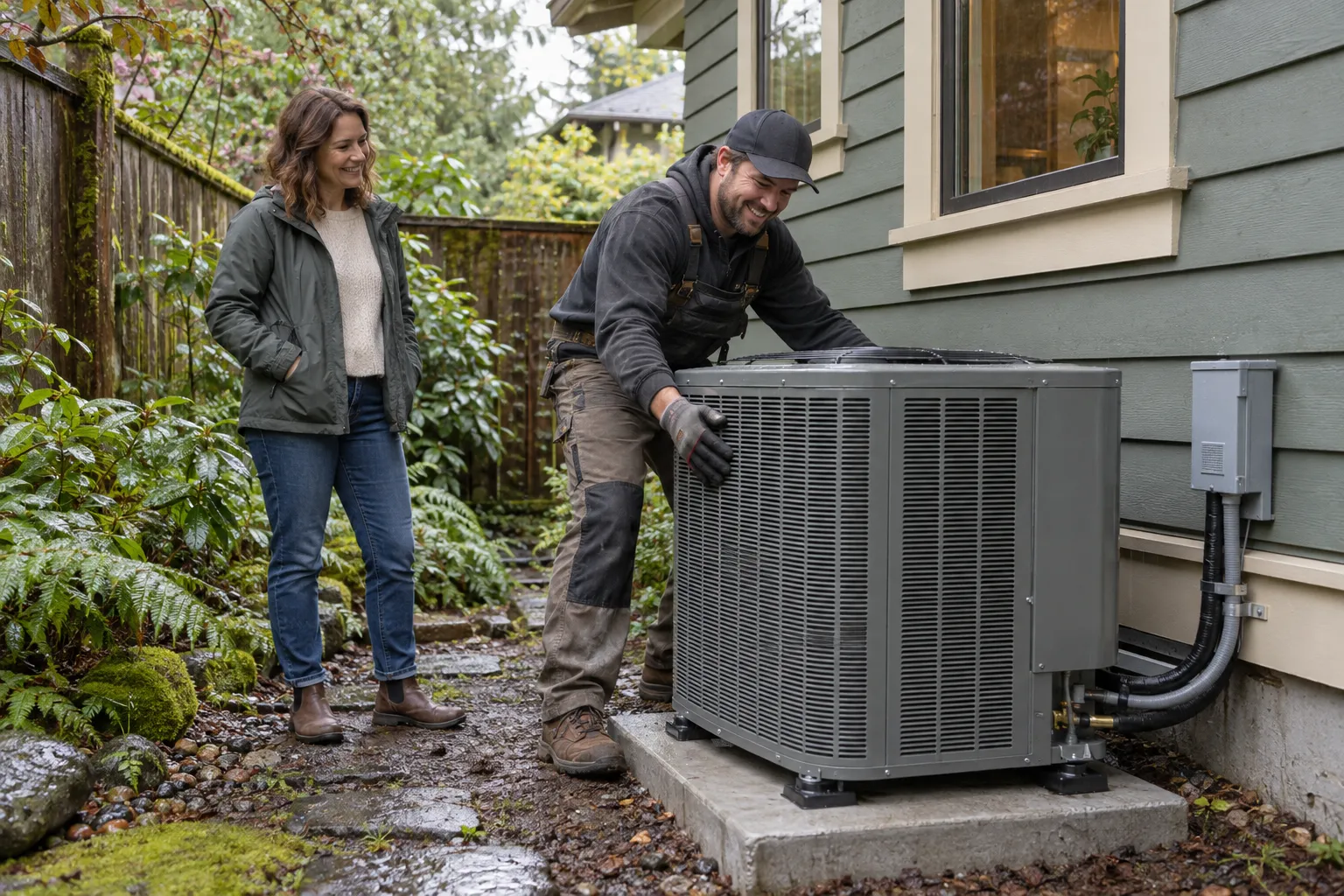
Old AC failing? Learn when to replace it, what it involves, and how to request an estimate.
Your AC stopped. Or your furnace went cold. Take a breath. You are in the right place.
This site is a guide for first-timers. You have never dealt with this before. Most homeowners have not. That is fine.
Midnightreach Heating & Air is a referral service. It does not do the repair. It connects you with independent providers in our network who handle heating and cooling work in Carbonado, WA and across the Carbonado area.
Here is the short version. Send a request. A local provider reviews it. You talk, you compare, you decide. No obligation.
Why move soon? Small HVAC faults grow. A weak part strains the parts next to it. A clogged filter lets a coil ice up. A furnace that short-cycles wears out its igniter. Waiting rarely makes the fix smaller.
You do not need to know the jargon. You only need to describe what you see, hear, and smell. A provider can sort out the rest.
Prefer to talk to a person? Request a callback to check provider availability. Hours vary by provider.
The rest of this page walks you through the process, step by step.
It matches your request with a local provider. That is all. The provider does the inspection, the repair, and the install. The provider sets the price and the schedule. You approve the work.
Something is off. Check the basics first. Is the thermostat set right? Are the batteries fresh? Did a breaker trip? Is the filter packed with dust?
If none of that helps, stop poking at it. Turn the system off at the thermostat. Running a struggling unit can turn a small repair into a big one.
A weak AC runs longer and works harder. Your power bill creeps up. Ice may form on the lines. Water may drip where it should not. A furnace with a bad part may click, then quit, then restart.
Each day adds wear. A cheap part today can become a compressor or heat exchanger problem later. That is the reason timing matters.
A good visit follows a pattern.
Typical U.S. repair visits often run from about one hundred to a few hundred dollars for small parts, and more for major ones. Costs vary by job. Always get the quote in writing.
Providers in our network serve Carbonado, WA and communities across the Carbonado area. Coverage depends on the provider, so availability varies by address.
Homes here are mixed. You will find older craftsman houses with original ductwork. You will find wood-frame homes with crawl spaces. You will find newer townhomes with compact, tight systems. Each type has its own quirks, and local providers know them.
The weather matters too. Long wet seasons, steady rain, and mild temperatures mean many homes lean on heat more than cooling. Even so, a warm spell can show up and expose a weak AC. Damp air also adds strain to equipment kept outdoors or in crawl spaces.
Here is what to do. Send your request with your city and a short note about the problem. A provider in our network can confirm whether they cover your address.
If the outdoor unit is blocked by moss, leaves, or storm debris, mention it. It helps the provider plan the visit.
Want to talk it through? Request a callback to check provider availability near you.
Long, rainy months keep air damp. Damp air and HVAC equipment do not mix well. Watch for musty smells, drip pans that overflow, and rust on the outdoor unit.
Moss grows on shaded pads and around outdoor units. Leaves pile up after storms. Both choke airflow. Clear loose debris gently with the power off. Do not spray the coil hard.
High winds can knock branches onto the condenser or trip power. After a storm, check the unit for damage before you switch it back on. If a fan blade looks bent, leave it off and ask a provider.
Many wood-frame homes run ducts through a crawl space. Damp ducts can sag, leak, or grow mold. If rooms heat unevenly, ducts are a common cause.
Older homes may have small ducts, few returns, or add-on systems. A provider can explain if your setup is the problem or the unit is.
Townhomes often have tight spaces and shared walls. Access can be tricky. Tell the provider about parking, gates, and where the equipment sits.
Some policies may cover sudden damage, such as storm harm. Check your policy. Providers can often help document damage for a claim.
Send a short note about what your system is doing. Include your city and the type of equipment if you know it. A provider in our network can reach out to talk about next steps.
Or, if you would rather speak with someone, Request a callback to check provider availability. Hours vary by provider.
Check the thermostat, the breaker, and the filter. Make sure the thermostat is set to cool and the batteries are fresh. If the unit still will not run, turn it off at the thermostat. Then request an estimate from a local provider.
Costs vary by job. In the U.S., small fixes such as a capacitor, igniter, or sensor often run from about one hundred to a few hundred dollars. Larger parts such as a compressor cost much more. Ask for a written quote before work starts, and ask what is included.
Replacement may make sense when the furnace is old, repairs keep repeating, or the heat exchanger is cracked. Ask the provider to compare repair cost with replacement cost. Get both in writing, then decide at your own pace.
No. Midnightreach Heating & Air is a referral service. It connects you with independent HVAC providers in its network. The provider does the work, sets the price, and handles scheduling.
Some policies may cover sudden damage, such as storm harm. Normal wear usually is not covered. Check your policy. Providers can often help document damage for a claim.
Tell us what your system is doing. Send a request and a local provider in our network can reach out to talk about next steps.
No obligation